Southern California Innovation Landscape
The Southern California (SoCal) Innovation Landscape, a part of the Innovation Landscapes Network (ILN), launched in 2025 as a community of practice to address state and federal conservation and resilience goals through collaboration, co-production, and strong science-management partnerships.
Innovation landscapes are distinct ecological landscapes within US regions of concentrated Department of Defense (DoD) investment that face accelerated environmental threats. The refinement and adoption of tools and technology to adapt to fire, flood, and drought are mission critical needs in regions experiencing rapid urbanization, weather extremes, and other natural hazards.
The SoCal Innovation Landscape is a discrete landscape with concentrated federal and state investment that is tied to the broader Innovation Landscapes of the Southwest, interrelated landscapes that prioritize the acceleration of science, technology, and nature-based solutions for adaptation to natural hazards. Southern California is a biodiversity hotspot that is also home to more than 24 million people who are experiencing rapid changes such as extreme heat waves, prolonged severe drought, increased precipitation variability, and increasing wildfire impacts.
In response to the growing sense of urgency to address natural hazards in both natural and human systems, the development of adaptation science and implementation of strategies have triggered advances in science and innovation and sparked myriad responses from federal, Tribal, state, and local governments, as well as nonprofit organizations. However, challenges remain in coordinating across sectors, organizations, and landscapes to harness collective innovation and operationalize adaptation strategies at broader scales.
A Landscape Approach
The DoD and the United States Geological Survey (USGS) formed the ILN to address today's rapid ecological changes at regional scales through an alignment of science, policy, management, and agency partnerships. The DoD's mission to confront threats to natural infrastructure through robust adaptation programs and accelerated technology transfer requires coordinated multi-sector efforts through established partnership and network relationships.
Advancing Resiliency and Action throughout Southern California
Our Approach
With an extensive community of practitioners and scientists already in place, the SoCal Innovation Landscape, hosted at San Diego State University (SDSU), is well-positioned to leverage current relationships and efforts to address mission threats from natural hazards such as wildfire, drought, and invasive species. We innovate through partnerships that translate science into action and rely on meaningful engagement in communities of practice and information and technology sharing to support adaptive management.
We will follow the model of the Southern California Montane Forest Conservation Strategy, a collaborative effort of SDSU, USGS, and the US Forest Service, to engage managers to address fire risk and forest resilience.
Coordinating Partners 
Expected Impacts
The SoCal Innovation Landscape coordinates science-management partnerships to apply innovative research, technology, and adaptation strategies to support decision-making at an accelerated pace.
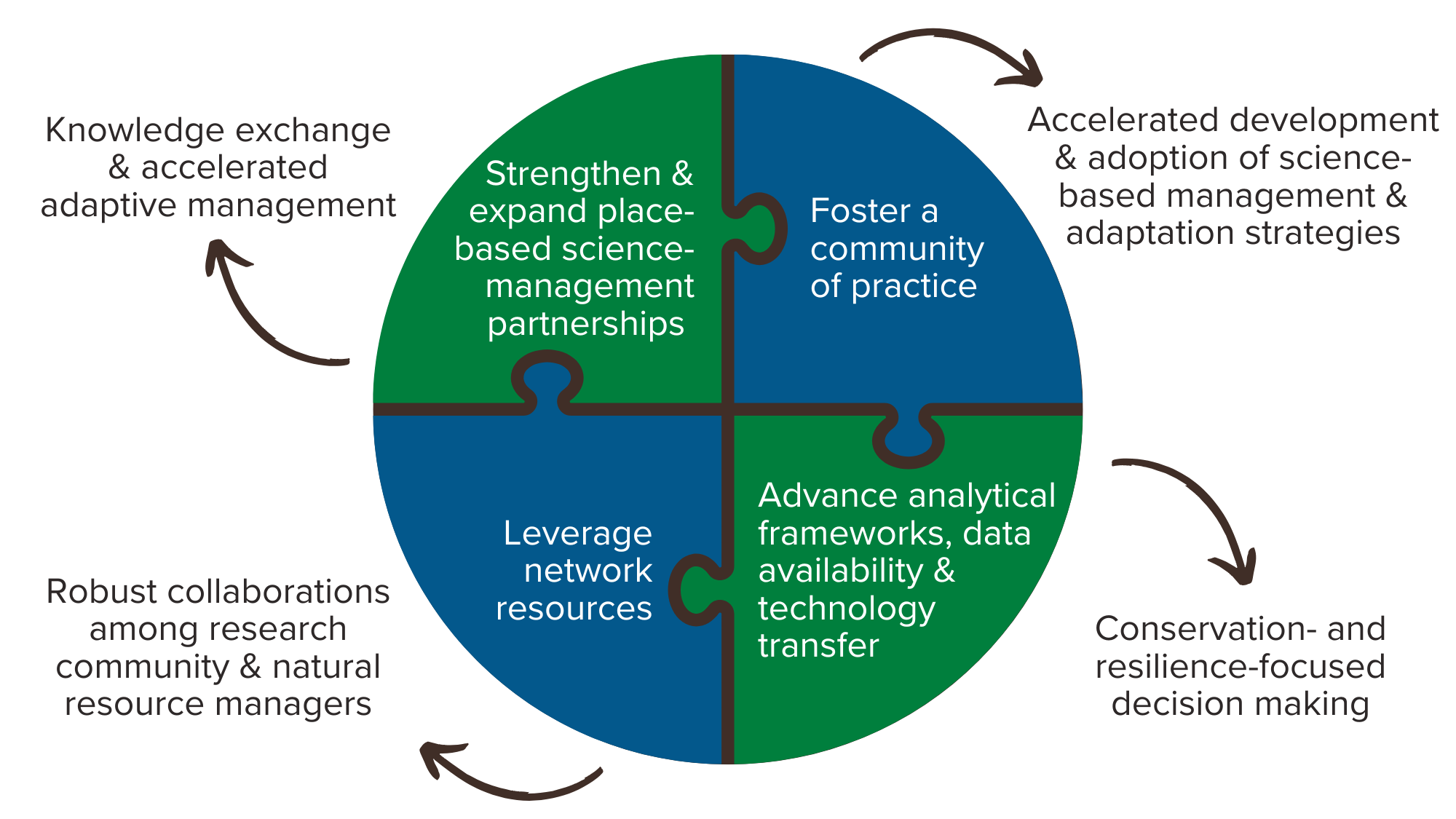 Open the image full screen.

Related Projects
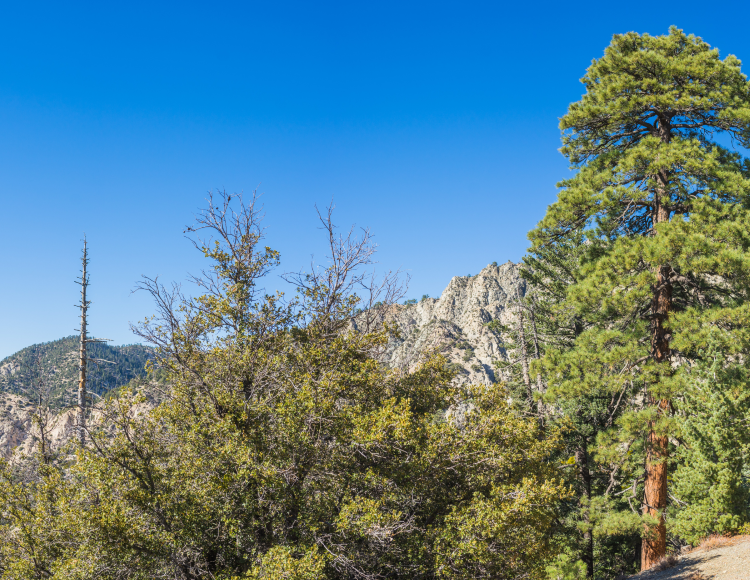
This project aims to enhance our understanding of the challenges facing Southern California's montane forests due to escalating threats from climate hazards. Through multi-jurisdictional collaboration, we are identifying strategies to bolster forest resilience.
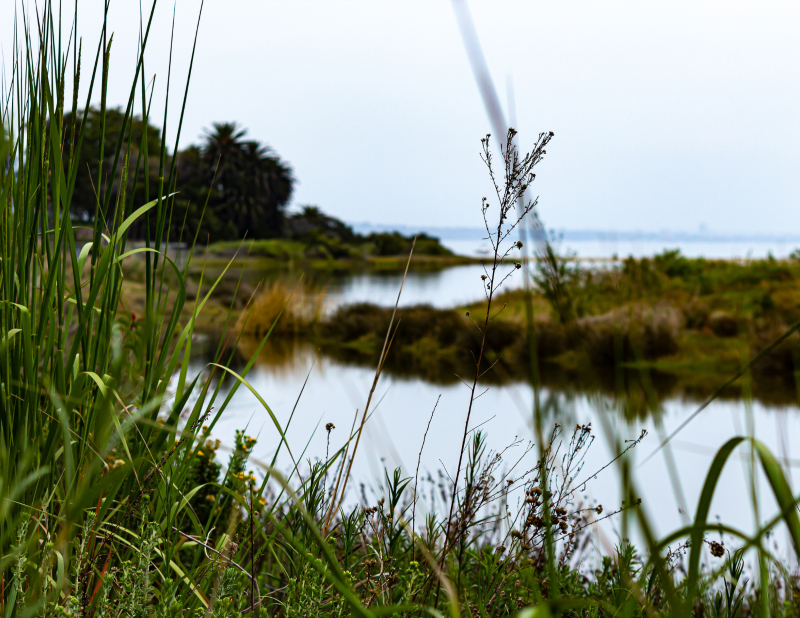
The Connecting Wildlands and Communities project is led by an interdisciplinary team exploring how connected landscapes can support adaptation and resilience for both ecosystems and local communities in Southern California.